
Business Process Automation (BPA)
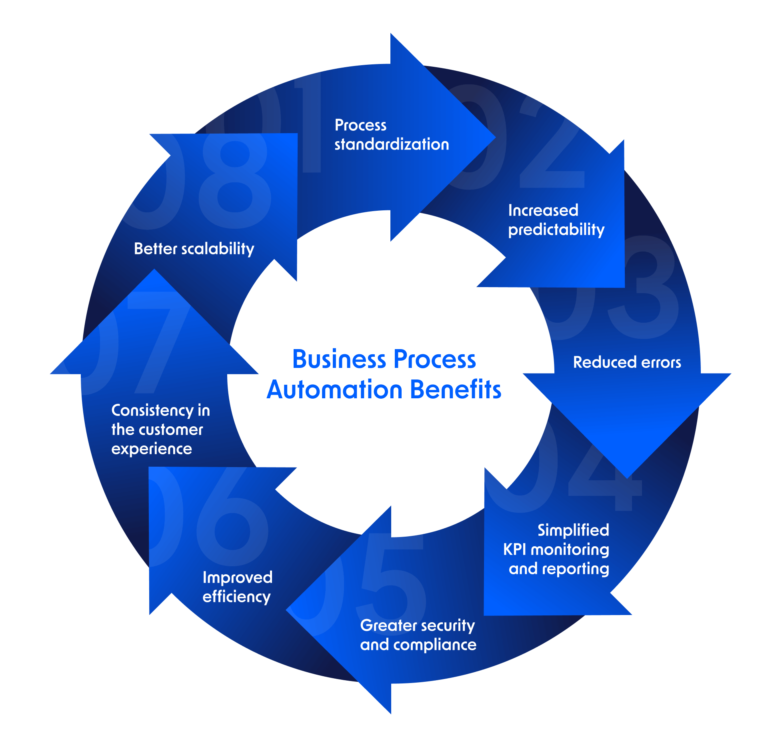
Key Advantages for implementing BPA
Cost Reduction
Automates labor-intensive tasks, minimizing payroll expenses and overtime.
Reduces errors that can lead to costly rework or compliance issues.
Increased Productivity
Frees employees from repetitive work so they can focus on higher-value activities.
Handles tasks 24/7, accelerating turnaround times.
Improved Accuracy
Standardizes processes, reducing human mistakes in data entry, billing, and reporting.
Scalability
Supports business growth without requiring proportional staff increases.
Enhanced Customer Experience
Provides faster response times, better accuracy, and consistent communication.
Data-Driven Insights
Automates data collection and reporting, enabling smarter decision-making.
Cost Savings
Labor Efficiency: BPA can reduce the time required for routine tasks by up to 70%, lowering staffing costs.
Error Reduction: Automation minimizes mistakes that lead to lost revenue, penalties, or customer dissatisfaction.
Operational Overhead: Automating tasks reduces reliance on physical paperwork, manual approvals, and redundant systems.
Faster Cycle Times: Automated processes shorten turnaround times for customer service, billing, and order fulfillment, leading to faster revenue recognition.
Areas that may benefit from implementing (BPA)
- Invoice Processing – Automatically generating, sending, and reconciling invoices.
- Email Processing - scan inboxes, analyse, categorize, and label. ensuring you never miss importasnt communication.
- Payroll Management – Automating salary calculations, tax deductions, and payments.
- Customer Support Tickets – Auto-routing and responding to common support inquiries.
- Lead Management – Capturing, qualifying, and assigning leads directly into the CRM.
- Appointment Scheduling – Automated booking, confirmations, and reminders.
- Employee Onboarding – Streamlining document collection, training assignments, and system access.
- Inventory Management – Tracking stock levels, reordering supplies, and updating records in real time.
- Contract Approvals – Automating workflows for document review, digital signatures, and archiving.
- Marketing Campaigns – Triggering email or SMS campaigns based on customer behavior.
- Data Entry & Reporting – Extracting data from multiple sources and generating reports automatically.